
At The Arc of Monroe, we believe in professional development, whether a young professional or seasoned manager. Growth in the workplace not only makes the staff better at their job, it also provides the opportunity for the organization as a whole to improve.
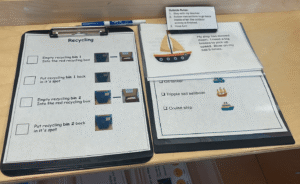
Lori Laniak, the ASD (Autism Spectrum Disorder) Employment Programs Manager for Job Path recently attended a training to both improve her skills in her field and to improve the programs within Job Path that support people with autism. This training, called the TEACCH Program provides a structure that focuses on using visual supports for people with autism.
The TEACCH Program was developed in the 1960s at the University of North Carolina. It focuses on adapting the environment, expectations, and support so people can be successful and independent. It focuses on the learning styles of autism and the use of strategies and visual supports to promote independence and capitalize on individual strengths. Lori says it’s designed to support people across the life span – which is really important for places like The Arc of Monroe who see ages ranging from 18 to 100.
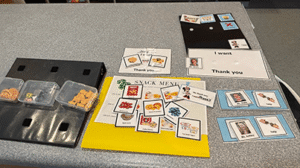
“We saw different students, pre-school-aged up to adulthood, that we got to work with, so we really got to see how you can implement the strategies and tools depending on what work skills or educational skills they’re learning. And you could see how you could use it in employment services as well at Job Path,” she said.
The TEACCH program included five days of training with lectures from staff, including physical therapists, occupational therapists, and speech language pathologists; group discussions, and hands-on team collaboration. They would first learn about a topic, get together with their group and develop an activity based on the topic, teach the activity to the people they were working with and then do an assessment on how the activity worked. After they completed the assessment, the group would then be asked to restructure it to better improve the independence of the people taking part in the activity. She says the TEACCH framework not only works for various ages, but also various environments, whether in a residential setting, day program, or supportive employment. The group also toured some of the residences to see the visual supports put in place for activities like cutting fingernails, taking medication, or communicating they’re not feeling well. She says it includes breaking down tasks into clear, visual steps to promote independence.
“If it was something like hand washing, having a picture of turning the water on, a picture of getting your hands wet, so the expectations are really clear. And then using predictable routines so every time you go to wash hands, that routine is very similar so that way you can fade off support,” Lori explains.
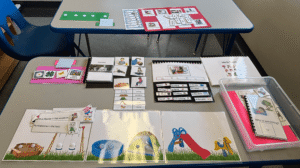
Lori says a big part of the TEACCH framework is getting to know the person you’re working with and understanding their learning style, communication strengths, and preferences. She says it’s not a “one size fits all” approach and often it takes an understanding of how a person learns and what they may need help with to find the best solution for them to become independent.
The goal of teaching the structure used in this program is for the person they are working with to then be able to work independently at their job or within their program using the visual supports on their own, rather than seeking assistance from a job coach. This will be especially valuable as Lori returns to The Arc of Monroe. She plans to implement some of the tools and assessments from TEACCH into the SELF @ The Strong program, one of The Arc’s programs with a focus on autism and use what she does here to improve it when she goes back for more training.
“My plan is to build a portfolio so I show how I’m using the tools and strategies here and then in the spring – a year from now, they have a virtual basics training, so I can take that and it’s just another step up from the initial training with TEACCH.”
Those tools and strategies will be included in autism training that new Job Path employees will receive during onboarding. The training will discuss how to use assessments to get to know a person’s learning differences and emotional regulation characteristics, as well as ways to modify the work environment to promote independence, and structuring work tasks to create clear expectations and establish routines.

Lori Laniak, ASD Employment Programs Manager for Job Path
Lori Laniak has a long history of working with people with autism, starting as early as high school when she was part of Shared Ski Adventure and summer camp at Seneca Lake. Lori went to college for Childhood and Special Education and worked at Mary Cariola for 5 years in various age groups, ranging from middle school to transition age. Later, she became a coordinator at the SELF @ The Strong program before starting her current role as ASD Employment Programs Manager for Job Path. Outside of work, Lori enjoys spending time with her husband and two sons. They love to go camping, going to their Bergen campsite almost every weekend each summer, as well as hiking and fishing, and sledding in the winter. They love to travel when they can, and spend lots of time with their family, including getting together with her in-laws for weekly Sunday dinners.